Home › Commercial Concrete Slabs and Flatwork
Get durable surfaces that stand up to traffic with commercial concrete slabs in Buffalo, NY. We pour floors, pads, and exterior flatwork for warehouses, retail centers, and industrial sites. Our crews manage large pours, surface tolerances, and joint layouts so you get a slab that performs under forklifts, vehicles, and equipment.
Superior Concrete Buffalo provides professional commercial concrete slab throughout Buffalo, NY, New York and the surrounding area. Our licensed, insured crew delivers safe, clean, on-time work with a free estimate before anything begins. Call (716) 303-4131 or request your free quote.
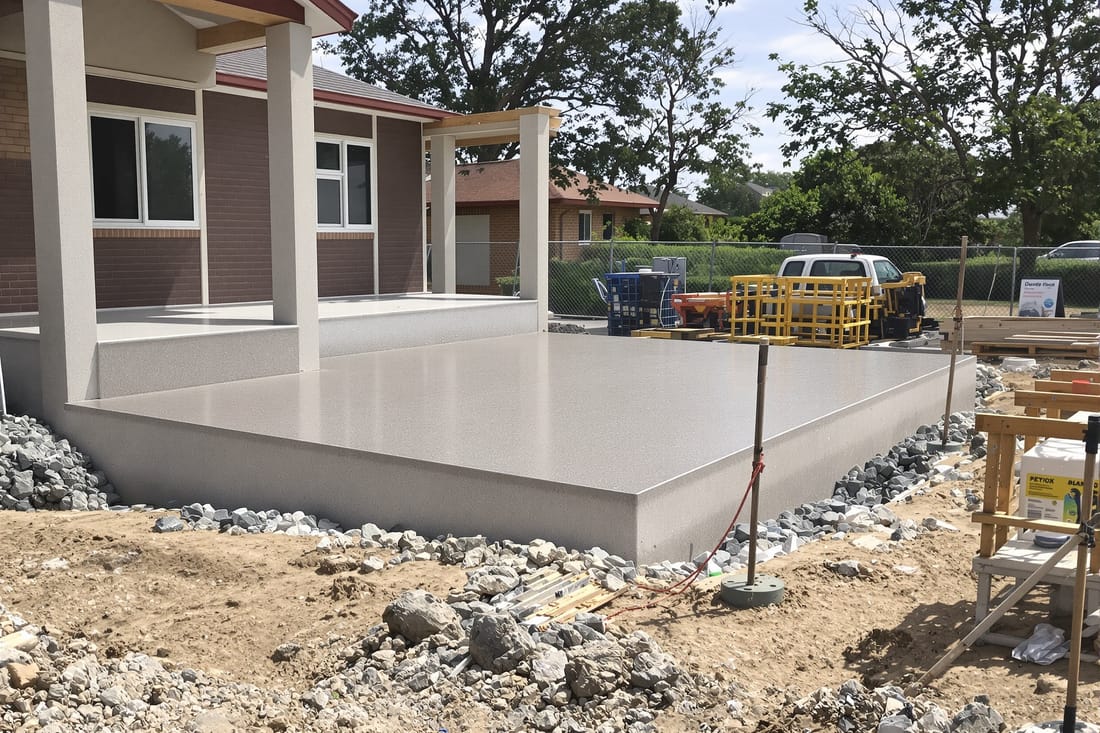
Commercial Concrete Slabs and Flatwork for Buffalo Businesses
Superior Concrete Buffalo installs and repairs commercial concrete slabs and flatwork for businesses, institutions, and industrial facilities across Buffalo and Western New York. We focus on the kind of concrete work that keeps operations running: warehouse and factory floors, retail and restaurant slabs, loading dock aprons, parking areas, dumpster pads, and equipment foundations.
Our team understands Buffalo’s climate and building stock. Older masonry buildings on the East Side, mixed use storefronts on Hertel, and new construction in the suburbs each have different slab requirements. We look at how you actually use the space, the loads your slab will see, and the freeze-thaw conditions it will face in Buffalo before we recommend a design.
Whether you are building a new structure, expanding an existing facility, or replacing a failed slab that is hurting productivity, we focus on long term performance, flatness, and safe, slip resistant surfaces that hold up through years of lake effect winters and road salt exposure.
How We Design a Commercial Concrete Slab for Buffalo Conditions
A commercial concrete slab is not just a thicker driveway. For each project, Superior Concrete Buffalo starts with a site visit and conversation about how the slab will be used. We ask about forklift weights, pallet racking layouts, point loads from machinery, and expected traffic patterns. For exterior flatwork, we also consider snow plow use, salt exposure, and drainage paths.
From there, we determine slab thickness, base material, reinforcement, and concrete mix. Light commercial interiors may do well with a 4 to 5 inch slab with fiber reinforcement. Warehouse and industrial floors usually require 6 inches or more, often with rebar or welded wire mesh. Dumpster pads, loading dock aprons, and areas that see truck or semi traffic typically need thicker slabs and heavier reinforcement to prevent rutting and cracking near the edges.
Buffalo’s repeated freeze-thaw cycles and the use of deicing salts push us to specify air-entrained concrete, proper water-cement ratios, and adequate curing time. For many commercial floors, we also consider flatness and levelness requirements that will impact racking safety and forklift efficiency. When needed, we coordinate with structural engineers and follow local codes and New York State standards so you end up with a slab that is appropriate for our region’s soil and weather.
Our Commercial Slab and Flatwork Installation Process
On commercial projects in Buffalo, our slab and flatwork installation follows a detailed, step-by-step process designed to reduce downtime and avoid callbacks.
We begin by cutting, removing, and hauling away any existing concrete or asphalt, then excavate to the proper depth. In many Buffalo neighborhoods, soils vary from fill to clay, so we compact subgrade carefully and, if needed, over-excavate and replace soft areas with stone. A well prepared base is critical for long term performance, especially in freeze-thaw.
We then install and compact a crushed stone base, typically No. 2 or No. 1 stone topped with a finer layer, to a thickness suited to the load and soil conditions. Formwork is set to control slab thickness and slope drainage away from buildings and doors. For interior slabs, we may install vapor barriers as required, especially under retail and office spaces where flooring will be installed.
Reinforcement is placed according to the design, which could include rebar grids, welded wire mesh, or structural fibers in the concrete mix. We support reinforcement so it ends up in the correct position within the slab, not resting on the base.
Concrete is then delivered and placed using chutes, pumps, or conveyors depending on site access. We strike off to grade, bull float, and, where specified, use mechanical screeds to meet flatness tolerances. Joints are installed at proper spacing to control cracking. Curing is managed with compounds, blankets, or both, taking Buffalo’s temperatures and wind into account to prevent surface cracking and scaling.
Finishing Options and Surface Treatments for Commercial Flatwork
Different commercial operations in Buffalo need different slab surfaces. Superior Concrete Buffalo offers several finishing and treatment options tailored to how your staff and customers will use the space.
For warehouses and manufacturing floors, we typically provide a hard trowel finish for a dense, easy to clean surface. Where slip resistance is critical, like loading docks, exterior walkways, and restaurant back-of-house areas, we apply broom or textured finishes to improve traction in wet and icy conditions.
If your project involves a customer facing area, such as a restaurant patio, brewery outdoor space, or storefront walkway, we can provide decorative options like colored concrete, exposed aggregate, or saw-cut patterns. These finishes stand up better than pavers in heavy freeze-thaw and snow removal and can be easier to maintain.
We also install protective sealers and surface hardeners where appropriate. In Buffalo, we pay particular attention to salt resistance and chemical exposure from deicers and industrial operations. For some interiors, we coordinate polished concrete systems that start with a good quality slab, then add grinding and densifying steps to create durable, low maintenance floors.
What Drives the Cost of a Commercial Concrete Slab in Buffalo
Commercial concrete slab pricing is driven by more than just square footage. When Superior Concrete Buffalo prepares a proposal, we walk you through the main cost factors so you can make informed decisions.
Key drivers include slab thickness, reinforcement type, and concrete strength. A 4 inch broom finished service walk costs far less than a 8 inch thick, double mat rebar loading dock or a high flatness interior warehouse slab. Site conditions also matter. Difficult access, tight city lots, or limited staging areas can affect labor and equipment choices.
Existing conditions in older Buffalo properties often add complexity. For example, removing thick, heavily reinforced concrete, dealing with unknown underground utilities, or correcting poor drainage can increase prep time. Soil quality and groundwater issues can require additional base stone or underdrains.
Schedule also affects cost. Pouring during shoulder seasons or in winter may require cold weather protection, heated enclosures, or admixtures. We are transparent about when it is worth investing in such measures and when it makes more sense to schedule work during warmer months.
We always recommend that business owners compare more than just line item prices. Ask how joints will be spaced, what reinforcement is being used, what compressive strength is specified, and how long the contractor allows for curing before heavy use. These decisions impact both upfront cost and how long your slab will last before needing repair.
Planning Around Buffalo Weather, Operations, and Codes
Commercial concrete work in Buffalo must be planned around real world constraints: harsh winters, short construction seasons, and business operations that cannot simply shut down for weeks.
The best time for new slabs and large flatwork projects is usually late spring through early fall, when temperatures stay above freezing at night. This reduces the need for blankets, heaters, or accelerators and allows crews to achieve consistent finishes and proper curing. For critical work that cannot wait, we implement cold weather concreting practices recognized by ACI and local building departments.
For active businesses, we stage work so parts of your site remain usable. That might mean phasing warehouse floor replacements by aisle, coordinating exterior pours to avoid blocking all entrances, or scheduling night or weekend work so your staff and customers can continue using the property.
We also stay current with City of Buffalo and surrounding town requirements, including permits, inspections, and ADA accessibility on sidewalks and entry approaches. If your project involves drainage changes, we discuss how your new slab will direct water away from buildings, neighboring properties, and public sidewalks, an important issue in older parts of the city with aging storm systems.
Why Buffalo Businesses Choose Superior Concrete Buffalo
Local owners and facility managers choose Superior Concrete Buffalo because we focus on performance, communication, and long term value for commercial slabs.
We start with clear expectations about design options, construction sequencing, and downtime. Before we pour, you know how thick your slab will be, what reinforcement is used, how joints are laid out, and how long you should wait before foot traffic, light equipment, and full loading.
Our crews are familiar with working in tight city alleys, around active docks, and in operating warehouses. We protect adjacent structures and surfaces, control dust and noise as much as possible, and keep access routes clear where safety allows. After placement, we walk you through curing and early use instructions so the slab achieves its designed strength and surface durability.
If you are planning a new commercial concrete slab anywhere in the Buffalo, NY area, we encourage you to reach out early in your design process. We can often suggest small adjustments in layout, jointing, thickness, or reinforcement that reduce cracking risk, simplify snow removal, and lower lifetime maintenance without compromising structural performance.