Home › Concrete Driveway Installation
Upgrade your home with a durable concrete driveway in Buffalo, NY that boosts curb appeal and stands up to harsh winters. We handle tear out, grading, and new pours with precise reinforcement and drainage. Whether you need a brand new driveway or full replacement, our crew delivers smooth, long lasting results tailored to your property.
Superior Concrete Buffalo provides professional concrete driveway throughout Buffalo, NY, New York and the surrounding area. Our licensed, insured crew delivers safe, clean, on-time work with a free estimate before anything begins. Call (716) 303-4131 or request your free quote.
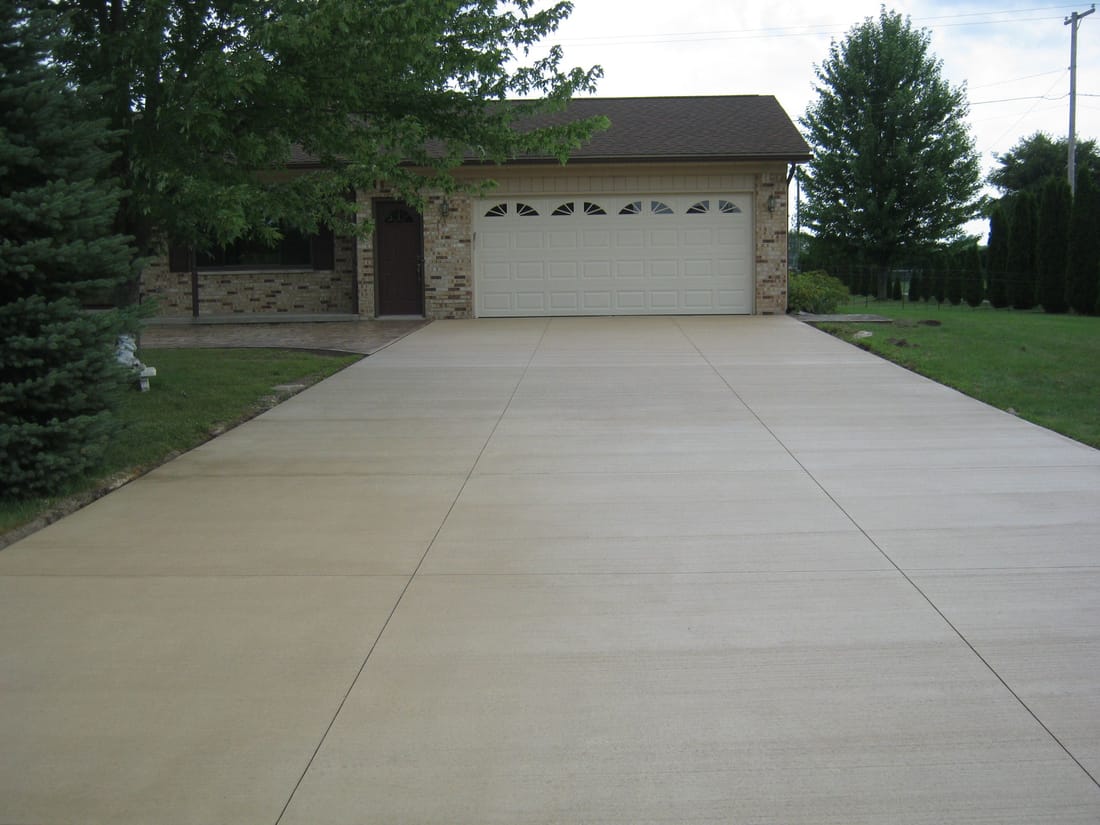
Concrete driveway installation for Buffalo conditions
A concrete driveway in Buffalo has to handle lake-effect snow, freeze-thaw cycles, road salt, and the weight of plow trucks. Superior Concrete Buffalo designs and installs driveways specifically for these conditions, not generic suburban climates.
Every project starts with a site visit. We look at how water currently drains, whether the soil is tight clay or loose fill, how close you are to the sidewalk, and where utilities run. In parts of Buffalo with older housing stock, like North Buffalo and South Buffalo, we often see mixed backfill and soft spots that must be corrected before any concrete is poured.
We also measure access for trucks and equipment. Many city lots are narrow, so we plan how to get concrete in without damaging lawns, fences, or neighboring property. If needed, we schedule smaller loads or use wheelbarrows for the last stretch to keep the site under control.
Before you sign anything, we give you a clear written scope that lists slab thickness, base depth, concrete mix, reinforcement type, and how many control joints we will cut. That detail matters. It shows what you are paying for and lets you compare apples to apples if you look at other bids.
What you choose: thickness, finishes, and layout options
The most important decision for a Buffalo concrete driveway is not color or pattern, it is structure. For most single family homes, we recommend a minimum 5 inch thick slab, not 4 inches, with a compacted crushed stone base of 6 to 8 inches. If you regularly park heavier vehicles, we may go to 6 inches and increase base depth.
We typically use a 4000 to 4500 psi air-entrained concrete mix that performs better in freeze-thaw conditions and with road salt exposure. Air entrainment creates microscopic air pockets that help reduce surface scaling in Buffalo winters.
Reinforcement is another key choice. For residential driveways we usually install 6x6 welded wire mesh or #3 or #4 rebar at 18 to 24 inches on center, depending on slab thickness and vehicle loads. On slopes or at transitions to the street, we may add extra reinforcement to reduce cracking at stress points.
Finish options include standard broom finish for traction, a light exposed aggregate surface, or decorative borders. In Buffalo, full smooth finishes are generally a bad idea for driveways because they get slick in ice conditions. A medium broom finish gives better grip for walking and shoveling.
Layout decisions matter too. We can widen an existing single-lane drive for easier parking, add a small turn-around pad so you do not back straight into busy streets, or adjust the pitch so meltwater flows toward the street or a drain instead of toward the house or neighbor.
How Superior Concrete Buffalo actually builds your driveway
Our concrete driveway installation process is methodical and adapted to Buffalo weather.
1. Demolition and removal: We break out old concrete or asphalt with a skid steer or jackhammers, then haul debris to an approved dump. We check for any buried surprises, such as old brick or cinders, that can weaken the new base.
2. Excavation and subgrade prep: We excavate to allow for the planned base and concrete thickness. In many Buffalo neighborhoods we encounter clay that holds water. We remove soft pockets and, if needed, stabilize with additional stone so the drive does not settle or heave unevenly.
3. Base installation: We typically use crushed limestone or similar compactable aggregate. It is installed in layers and compacted with a plate compactor or roller. Proper compaction is essential in our freeze-thaw climate so water does not pool under the slab and lift it in winter.
4. Forms and reinforcement: We set sturdy forms to the correct pitch so water drains properly. Then we install rebar or wire mesh and support it so it stays within the slab, not flat on the ground, when concrete is placed.
5. Concrete placement and finishing: We schedule the truck based on actual site temperature and wind, since Buffalo weather can change quickly. We place the concrete, strike it off to grade, bull float, then wait for the right set time before broom finishing. On hot summer days we may use set retarders or misting to keep the surface from drying too fast.
6. Control joints and curing: We cut joints at calculated spacing, usually 8 to 12 feet apart, to guide where the concrete will crack. Then we apply a curing compound or, if conditions allow, a wet cure process that reduces the risk of shrinkage cracks.
You can usually walk on the driveway after about 24 to 48 hours, but we recommend waiting a full 7 days before parking normal vehicles and up to 28 days before heavy trucks or dumpsters.
Buffalo weather timing, curing, and winter performance
Concrete work in Buffalo cannot be scheduled the same way it is in warmer regions. Superior Concrete Buffalo plans driveway pours around local temperature patterns and lake-effect forecasts.
Prime installation months are typically May through October. In early spring and late fall, we watch nighttime lows closely. If temperatures are expected to drop near freezing shortly after a pour, we use cold weather practices such as warm water in the mix, insulated blankets, and sometimes accelerators so the concrete gains strength quickly.
We avoid pouring on frozen ground, because as that ground thaws it can settle and crack the slab. If your driveway area is frozen, we may delay, strip out frozen material, or tent and thaw the ground before work.
Proper curing in Buffalo is crucial. Sudden wind off Lake Erie can pull moisture from fresh concrete and cause surface checking. We adjust finishing timing, apply curing compounds, and sometimes use windbreaks on exposed sites.
For long term winter performance, we recommend using sand or a calcium chloride based deicer instead of high strength rock salt during the first winter. We also suggest sealing the driveway after the first year, once the concrete has gone through a full seasonal cycle, to reduce moisture penetration and surface scaling.
Costs, permitting, and what affects your price
Concrete driveway pricing in Buffalo varies based on real conditions, not just square footage. When Superior Concrete Buffalo prices a job, we consider:
• Driveway size and thickness: A larger, thicker slab uses more concrete and reinforcement. Going from 4 inches to 5 or 6 inches increases material but can significantly improve performance under plows and work trucks.
• Base work required: If the existing driveway was laid over poor soil or thin base, we may need deeper excavation and more stone to get a stable platform. Corner lots and sloped drives often need extra grading work.
• Access and demolition: Tight city lots, limited truck access, or extensive tree roots can add labor time. Removing thick, reinforced concrete costs more than tearing out thin asphalt.
• Reinforcement and finishes: Upgraded rebar patterns, decorative borders, or an exposed aggregate surface cost more than a basic mesh-reinforced broom finish, but may still be more cost effective than pavers.
In Buffalo, you may need permits or inspections for a new or widened driveway, especially where it meets the sidewalk or curb. We help you navigate city or town requirements, such as apron details, thickness at the sidewalk, and distance from property lines.
Instead of one-line estimates, we provide itemized proposals. You see exactly how much is allocated to demolition, base, concrete, reinforcement, finishing, and any extras, so there are fewer surprises once the work starts.
How to prep, what to expect, and how to make it last
Preparing for installation on your end helps the driveway project move smoothly. Before we arrive, we ask that you clear vehicles, move portable items like basketball hoops or planters, and let neighbors know about a few days of limited street parking if we need equipment access.
During work, expect noise from demolition and equipment. For most residential concrete driveway installations, active site work takes 2 to 4 days, depending on size, weather, and complexity. You will not be able to use the driveway for parking during that time or during the curing window.
After installation, the first year is critical. Avoid parking in the same exact tire tracks every time if possible, especially near the street edge where slabs are narrower. Do not use aggressive deicers that contain ammonium salts, and avoid dragging plow blades directly on the concrete. A small rubber edge or slightly raised plow shoe reduces scraping.
We recommend a periodic inspection each spring. Look for any open joints that need resealing, spalling spots from salt, or drainage issues where ice is forming. Catching small problems early, such as sealing minor cracks, extends the life of the driveway significantly.
Superior Concrete Buffalo can also revisit to apply a penetrating sealer, adjust drainage if you re-grade landscaping, or cut an additional control joint if we see stress patterns forming. Our focus is not just a clean pour on day one, but a driveway that works for Buffalo winters and holds up year after year.