Home › Concrete Garage and Shop Floors
We install concrete garage and shop floors in Buffalo, NY that stand up to vehicle traffic, tools, and daily use. Our crew ensures proper thickness, reinforcement, and finishing so your concrete garage floor resists cracking and drains correctly. Whether you are building new or replacing an old slab, we deliver a clean, functional surface.
Superior Concrete Buffalo provides professional concrete garage floor throughout Buffalo, NY, New York and the surrounding area. Our licensed, insured crew delivers safe, clean, on-time work with a free estimate before anything begins. Call (716) 303-4131 or request your free quote.
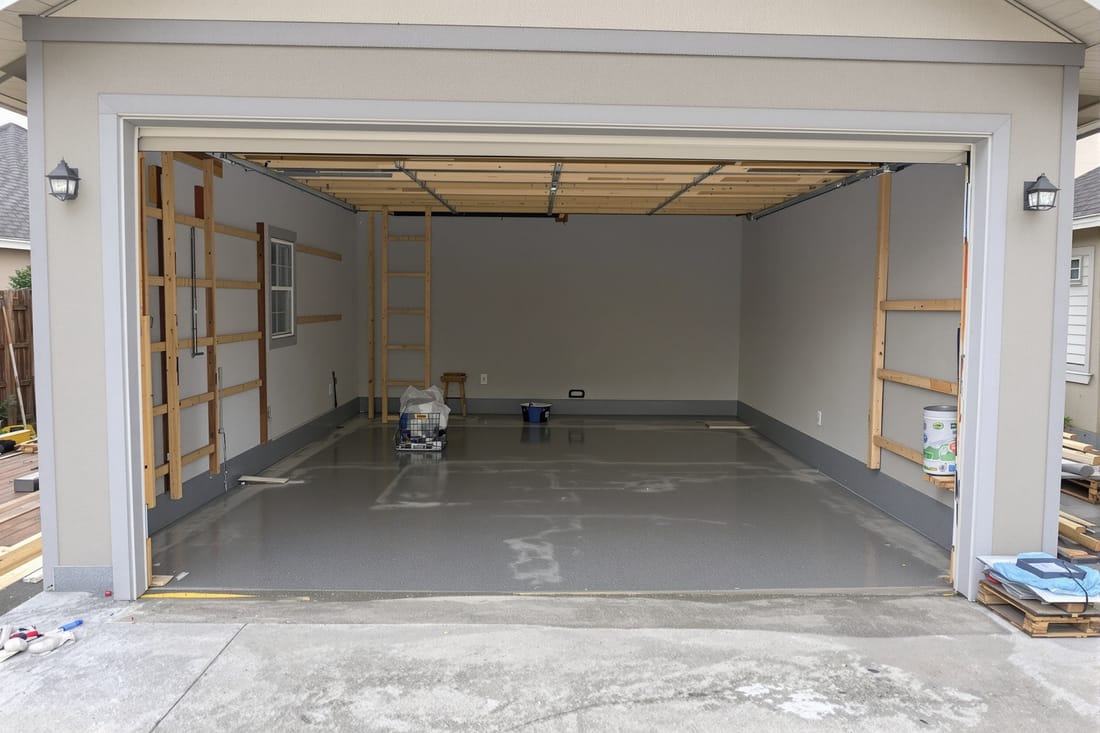
Concrete Garage & Shop Floors Built for Buffalo Conditions
A concrete garage floor in Buffalo needs to handle road salt, freeze and thaw cycles, and heavy vehicles without heaving or flaking. Superior Concrete Buffalo designs and installs garage and shop slabs specifically for Western New York conditions, not a generic one-size-fits-all mix.
We start by confirming the intended use of your garage or shop. A residential two-car garage, a small repair shop, and a light industrial bay do not need the same slab thickness, reinforcement, or finish. We ask about vehicle weight, how often you drive in and out during winter, whether you weld or use chemicals on the floor, and if you want to hose it down regularly. This information determines the slab thickness, reinforcement style, and surface treatment, so the floor holds up for decades instead of only a few winters.
From there, we look at your site. Buffalo neighborhoods often have fill material, clay pockets, or poor drainage left over from older construction. We probe the subgrade, check elevations relative to your driveway and yard, and look for damp spots. These details drive how we prepare the base under your concrete garage floor, and that base is the real foundation of a long-lasting slab.
Site Prep and Base Work That Prevents Heaving and Cracking
Most early failures in concrete garage and shop floors can be traced back to poor base preparation. Superior Concrete Buffalo dedicates a large share of the project to this step because Buffalo’s freeze and thaw conditions magnify any shortcuts.
We begin by demolishing and hauling away any existing slab or failing asphalt, then excavate to the depth needed for the new concrete plus a proper stone base. In many Buffalo lots we find soft or organic material within the top 8 to 12 inches. That material is removed, not compacted in place. Leaving it under a slab invites uneven settling and random cracks.
A graded layer of compacted crushed stone or gravel, usually 4 to 8 inches depending on use and soil, is installed and compacted with a plate compactor or roller in multiple passes. This creates a stable, drainable platform. In areas with poor drainage or a high water table, we may build in slight slopes in the stone base or add drain tile near the perimeter to keep water from sitting under the slab.
Around the perimeter, we set substantial forms and confirm elevations relative to doors, steps, and the driveway. For heated garages or shops, we coordinate with your HVAC contractor or electrician so floor heat tubing and conduits can be installed in the base zone or within the concrete without interfering with reinforcement.
Concrete Mix, Thickness, and Reinforcement Choices
The performance of a concrete garage floor depends on more than simply pouring 4 inches of concrete. Superior Concrete Buffalo selects mix designs and reinforcement based on local conditions and your actual use.
Typically, residential garage slabs are 4 inches thick using a concrete mix in the 3,500 to 4,000 psi range. For shops that support heavier trucks or equipment, we often recommend 5 to 6 inches. We include air entrainment in our mixes, which helps the slab handle Buffalo’s frequent freeze and thaw cycles without surface scaling.
Reinforcement options include welded wire mesh, deformed rebar, or synthetic fibers, and often a combination. Wire mesh helps control shrinkage cracks but only works when properly supported on chairs so it sits in the middle of the slab, not at the bottom. For shop floors with point loads from lifts or jack stands, we place #4 or #5 rebar in specific patterns or thickened areas under these loads.
If you plan to drive a plow truck, store a camper, or add a two-post lift, we design the concrete garage floor for those future loads rather than hoping a standard slab will be enough. We also consider air content, slump, and additives like water reducers so the mix places well, finishes properly, and cures to the strength needed for long-term durability.
Pouring, Finishing, and Joints for a Functional Work Surface
Proper placement and finishing practices are what turn quality concrete into a useful garage or shop floor. Superior Concrete Buffalo brings an experienced crew that knows how to sequence the pour for Buffalo’s changing weather and temperature swings.
We place concrete so that it flows evenly without excessive reworking, which can add surface water and weaken the top layer. As the concrete sets, we use screeds and bull floats to level the surface and bring up paste without over-finishing. Overworked surfaces are prone to dusting and flaking, especially when winter road salt drips onto the floor.
Control joints are cut or tooled into the slab in a carefully planned pattern. These joints create weakened planes where the concrete can crack in a straight line instead of randomly through the middle of your garage. Joint spacing is usually 8 to 12 feet, adjusted for slab thickness and layout. Around posts, door openings, and inside corners, we place additional joints or reinforcement because these zones concentrate stress.
Finish options include a standard broom finish for better traction when wet or a machine troweled finish for smoother shop floors. In Buffalo, we often recommend at least a light texture near overhead doors where snow and slush melt. For shops that use rolling creepers or carts, we can keep the main work area smoother while maintaining texture near entries for safety.
Sealers, Coatings, and Salt Protection
Buffalo winters are hard on concrete garage floors because road salt accelerates surface damage and pitting. Superior Concrete Buffalo plans for this from the start by combining proper curing practices with protective treatments.
After finishing, we cure the slab using curing compounds or moisture retention methods for a minimum of several days. Rushing this step or letting the slab dry out too fast leads to more shrinkage cracks and a weaker surface. Once the concrete reaches an appropriate age and moisture level, we can apply a penetrating sealer that soaks into the slab and helps resist salt, moisture, and staining without creating a slippery film.
For homeowners and shop owners who want a higher level of protection or a specific look, we install epoxy and polyaspartic coatings over properly prepared concrete garage floors. This involves diamond grinding the surface, treating any cracks, then applying multi-layer coatings with optional flakes for traction. In Buffalo’s climate, we pay close attention to slab moisture and temperature before coating to avoid bubbling or peeling.
We explain the pros and cons of each protective option. A simple penetrating sealer is cost effective and low maintenance. Coatings are more of an investment but give you a bright, easy to clean working surface that makes oil leaks and hardware easy to spot.
Cost Factors and What Affects Your Quote
Garage and shop floors in Buffalo vary in price based on more than just size. Superior Concrete Buffalo provides clear, itemized estimates so you understand where every dollar goes and what choices influence cost.
Key cost drivers include slab thickness, reinforcement type, and access to the work area. A standard 4 inch residential concrete garage floor with basic wire mesh costs less than a 6 inch shop slab with rebar and thickened pads for lifts or heavy machinery. Tight access behind older homes, the need to pump concrete, or extensive demolition of old slabs can also increase labor and equipment time.
Soil conditions and drainage are another major factor. If we discover soft or saturated subgrade that requires deeper excavation and additional stone, it will add to the project cost but will also significantly increase the life of your floor. We tell you about these conditions before work begins and provide options when possible.
Finishes and protection choices affect price as well. A basic broom finish with a standard penetrating sealer is more economical than a high build epoxy coating system. Many Buffalo homeowners choose to pour the slab now and add coatings later once they have lived with the space and decided how they want it to function.
Planning Your Project With Superior Concrete Buffalo
Timing and coordination are important when installing a concrete garage or shop floor in Buffalo. At Superior Concrete Buffalo, we schedule pours based on realistic weather windows and the needs of other trades so your project moves smoothly.
We discuss timing early, especially if you are building a new garage or converting an existing space into a workshop. In colder months we can still pour interior slabs with proper heating, blanketing, and mix adjustments, but this must be planned so the concrete cures properly and does not freeze during its early strength gain.
Before we begin, we walk you through where joints will go, how slopes will be set for drainage, and any thickened areas for heavy equipment or future lifts. For attached garages, we pay close attention to the interface with the house wall and steps so there are no trip hazards or water traps.
When the work is done, we provide clear guidance on when you can walk on the slab, move tools in, and finally park vehicles. Typically, light foot traffic is allowed after about 24 hours, light equipment after several days, and full vehicle loads after 7 to 10 days, depending on mix and conditions. We also give maintenance tips particular to Buffalo, including how to manage salt, when to reseal, and what to look for over time so small issues can be addressed before they become major problems.